Showing posts with label pokemon. Show all posts

Monday, November 10, 2025

World of Dungeons: Pokemon Spirit Combat

In World of Dungeons, magic is done primarily by summoning spirits. Yet these are the only rules present for it. Wondering how I could expand it, and mostly, wanting to define some example spirits for a list, I ended up wanting to turn magic into Pokemon-style combat. As such, spirits should have a list of 1 to 5 abilities that provide either firepower (against other spirits or the wizard's enemies), defense (same) or some utility (MOs in pokemon, utility spells in all rpgs). 

Spirits are usually minor spirits, not named or unique (a rule that can be broken at any moment); some actually seek for a wizard in order to "level up" or spend their excess energy; others are too dumb to know they are being catched. Lawful-aligned spirits might want to help their own, while chaotic demons will take fun in corrupting their wielder. 

The template for spirits in the pokedex should be something like:

NAME: generic name for the spirit, but you can rename your own, why not?
LORE:  The most important points are: habitat, a common way to make contact in order to "catch" it, and its usual mood. The latter can influence how the spirit behaves on partial successes and failures.
ATTACK#1 (maybe something useful at low level)
ATTACK#2 (the rest of the attacks are learned in order)
ATTACK#3 (though sometimes there might be a choice in the order) 
ATTACK#4 (mostly on through the middle progress)
ATTACK#5 (the idea is to put the most gamebreaking ones at the end)

I had this idea that, when you command your spirit to do something (roll 2d6+mod) and get a partial result/failure, the attack may be at random. Roll 1d6 and if you roll over your intended #attack, it happens. Else, the spirit may do the rolled attack or just act on his nature.

The easiest leveling up method for pokemons spirits is to have them grow when their summoner does: each level up of the caster, he can/must level up a spirit instead of getting some or all their HP (actual amount to be discussed). This also sort of fixes the fact that fighters progress the same as wizards in World of Dungeons.

An important note on spirit combat is that spirits do not die when defeated: they are debilitated. They don't even track hp: Instead they have a resistance value: if they are damaged by that amount, they are "stunned" for a round. If they are damaged for double that amount, they are defeated and need to rest. Damage and armor work as normal, but spirit attacks have types (electric, holy, fire, ice, etc), and spirits have resistances and weaknesses to those types (this means less, more or maybe no damage)

The next entry will probably be some spirit prototypes.The more I think on this project, the more I see that this whole blog was pointing towards it since the beginning. (even these ff8 GFs tie in here somehow)


-------------------------------------------------------------------------------------- 


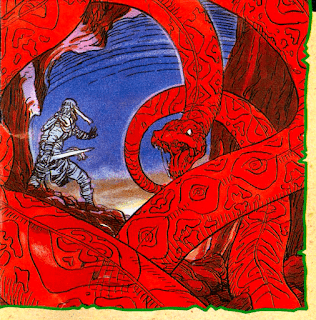
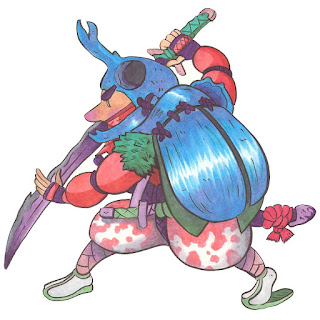
art by Suzuki Sarunobu

related (in my head) bonus: on the origins of the Miko

The origin of the Miko dates back to the end of the Jomon period (-14,000 to -300 BC) when women shamans entered into convulsions and trances to transmit the messages of the deities. Over time, they grew in importance, performing religious services and taking charge of various political and social activities.

From the Nara era (710 - 794), the political powers of the archipelago never stopped trying to regulate the activity of the Miko, to both control it and prevent abuse.

During the Sengoku period (1477 - 1573), the institution of the Miko also suffered from the chaos of the country and many priestesses brightened up in the country, becoming "arukimiko" - literally, "itinerant Miko" and exercising activities close to prostitution.

It was during the modern era, from the Edo period (1603 - 1868) to the Meiji era (1868 - 1912), that their role was gradually formalized, the practice of shamanism being prohibited under the Tokugawa while the imperial restoration prohibits any spiritual activity. 

The Miko that populate Shinto shrines today is easily recognizable. They wear a red hakama, the chihaya (white kimono top with wide cuffs), Japanese sandals, and quite often a hanakanzashi, a flower ornament that serves as a headdress.

They take care of keeping the shrine shop, offering omikuji, helping with the maintenance of the shrine, assisting the kannushi (Shinto priests in charge of the shrine) as well as performing the traditional dances, known as "Miko-mai".
 
It is often young virgin girls who hold these jobs, in the form of volunteer work or part-time work. They usually leave him when they get married.

There are several types of Miko, three categories if we follow the ethnologist Kunio Yanagita:

    jinja miko ("shrine miko"), the miko who participate in dances and rituals
    kuchiyose miko ("miko medium"), the miko who speak for the dead
    kami uba ("woman of the gods"), the miko in charge of the worship of the deities

The Miko has become, like other ancient symbols of the country, elements of Japanese popular culture. Often presented in manga with a broom in hand in shrines, they have the stereotypical figure of being temperamental and fierce.


Sunday, February 27, 2022

Schools of magic


image: twitter - @ahruon

From the gamist point of view, there are plenty reasons to divide magic into colors in an RPG

- increased replayability

- increased difference between various PC casters

- increased customization and sense of identity. Say that novice wizards start with one color, expert can add a second and masters can add a third That makes for organic character customization which comes up through gameplay, not at character creation. Much more if you pair it with all or some spells being "found" in-game.

- different types of wizards build world. Factions, tensions, zones on the map that belong to ones or others. The whole Kanto is built over making zones for each pokemon type, but the same can be said about Ravnica.

- the opportunity to create different legendary spells or magic items tailored to specific types, which can be quested for by their respective PCs. This type of "item hunting" is one of the best things you can have when you play a sandbox.

And, lets face it, I want to create something inspired by Pokemon Magic since ages. It's one of the best examples of good gameplay-oriented worldbuilding in history, and there is a lot to steal from it.

After thinking a lot about this,  I think that the correct number of schools for my project should be around four or five in the book, with around 10 spells each (lets say: 6 basic, 2 expert and 2 legendary). But instead of closing them in a wheel (as MTG does) keep it open so one could create custom schools or spells around any concept one should want (chronomancy, technomancy, etc. Sense of taste not included) while still being compatible with the existing lists. As I was doing my research, I found out that the uneven GLOG does "in spirit" much of what I am striving to do, but of course, I am going to do it my way anyways. 

So, first of all, lets see some examples of magic schools portrayed elsewhere.

You got eight of them in post-3e D&D: abjuration, alteration, conjuration, divination, enchantment, illusion, invocation, and necromancy. This particular case is interesting because types are defined mostly around their "role" in game: alteration and illusion are suited for adventuring tricks, conjuration and invocation are more suited for combat, with necromancy having a very defined use. To put it in a way, wizards are much more "pigeon holed" in what they can or cannot do.

Pokemon, on the other hand, is divided by theme (lightning, plant, water, etc) but the role of every theme is mostly the same: beat the other guy down. 

Magic the Gathering's five colors fits nicely between both examples: Colors have a solid definition in theme, and while all of them can take you to "zero life" they play wildly differently. And while they have limitations and specializations, they feel like they are built around a theme in-game and not around utility in a design room as 3e D&D does.

Ideally I want to conceive five wizard schools and try not to rip off MTG straight in the process. Five is a curious number to base something, as there are much lesser correspondences than with the number four (four directions, four elements, four seasons, four quadrants on an X/Y graph); though it is used on chinese systems (earth-metal-wood-water-fire) or japanese ones (wind-fire-water-earth-void). Also japanese use a five season calendar that divides summer into a rainy and a dry season.


So, to begin with, here is a table in which (you/I) can roll up some wizard schools. Your school spell list gets one spell for each type below, but for one that is unknown to them (roll). Two other types get one and two extra spells respectivelly, for a total of 10 spells. A school with three types of offensive spells is likely to be a very quarreling faction, while one that focus on alter the self or alchemy will look more like a sect of cultivators.

1 offensive (damage + certain status alterations)
2 healing (damage and or status alterations, including death)
3 divination (prophecy, ESP, commune-style questions, etc. Tapping into the "hidden" side of everyday things, such as travelling through mirrors or speaking with animals, also goes here)
4 summoning (other entities, forces or objects)
5 enchanting (alter things and people, also non-violent combat moves such as sleep)
6 altering the self (transformation or other power ups)
7 alchemy (preparing potions or other consumables, probably buffed in uses to compete with instant spells)
8 protection (any kind)


Now, roll two or three times for the themes of the school. These will help you give form to the spell list, and hint which forces or mythological animals power your advanced spells. Just forget for a while that these are the official pokemon types.

1. Fire
2. Water
3. Grass
4. Electric
5. Ice
6. Fighting
7. Poison
8. Ground
9. Flying
10. Psychic
11. Bug
12. Rock
13. Ghost
14. Dark
15. Dragon
16. Steel
17. Fairy
18. Normal

Suit yourself to choose what each of this words mean. Fairy in the pokemon game is used mostly as mind-alteration (which make more sense on the Psychic type IMHO) but it can be interpreted in a more open way and make it about fate, bending space and time and other works of elves and demigods. It feels natural to expand Ghost into necromantic/exorcist territory, while type: Normal is probably best used as representing animals and other beasts (druidic style)

Now roll twice for your thematic colors

1. Red
2. Blue
3. Yellow
4. Orange
5. Purple
6. Brown
7. Black
8. Green
9. Pink
10. Indigo
11. White
12. Emerald
13. Lavender
14. Turquoise
15. Gold
16. Silver
17. Bronze
18. Cyan
19. Magenta
20. Go monochromatic.
You can always choose this instead of any result. If this is your only result, roll again.

EDIT: link to Dont worry, I've got a Sword where the author has worked on the same topic.

EDIT 2: 8 Schools of Magic by Reckless Dweomer


Wednesday, January 19, 2022

initiative without rolls


Happy new year! it feels like its been a long time without posting. Or maybe its just my feeling. This blog has been boosted like x 10 in visitors since Alex Schroeder mentioned me in his blog (its not like I had many before lol) and I should be making only hIgH qUaLiTy posts from now on. 

I want to take an entry to talk about my initiative houserule, and why I like it so much.

Basically, unless there is surprise, initiative goes to the side whose has the single member with more max HP, and only in case of a tie I randomize it.

Additionally to this, I don't do the "one side acts, then the other side acts" thought it would work perfectly I guess. I complicate it a little further by making the side who acts choose one member which acts (for the monsters, the GM chooses) and then, after the action, a member of the other side acts; and this goes on until everyone involved has taken its turn. Arrows and Spells can be shot reactivelly (spells require an armor-based roll to work in time) but doing so it consumes the turn of the shooter/caster.

I've been playing like this in my last campaign and I've accostumed myself a lot to it; to the point that I don't think I am going back. Combat is much more swift (much more combined with the "no damage, just take a Hit Die" houserule), and also it makes interesting effects in game: 

Having a Fighter in the party is suddently much more important. His instincts help everyone to take the lead on a fight, even if he doesn't fight himself: Maybe he just grabs the initiative so the thief can do something first. Tougher monsters are also scarier, because their sheer "speed". Suddently it also matters in which turn of the watch the monster appears: if the fighter is asleep, the monster can get a great advantage.

The "alternate sides" thing also adds an element of strategy for the players, something that its often missing from combat when a game makes the fights a little bit abstracted. Using this (also abstract) ways to control combat gives PCs more buttons to press which, in my opinion, adds a +1 to old D&D.

Sometimes I like to distinguish swords from the other weapons because they add a little bonus to HP only for initiative purposes. They are the weapon of heroes after all.

And thats it. 

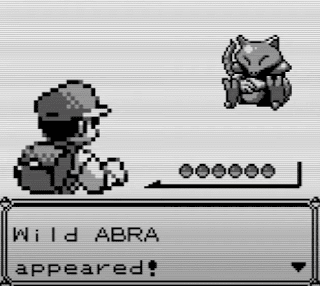
I want to note that it is also possible to make a much more gamist initiative without rolls, and I found out by playing pokémon this last weeks.

In the GBA games, initiative works like this: both trainers choose their movement at the same time, then the pokemon with most speed acts first. Stats are very granular, so having a tie is very rare.

Certain movements have priority over others, regardless of speed. For example, taking a potion or changing pokemon goes always before any attacks (there is but one attack AFAIK that specifically strikes before retiring the pokemon). Some attacks have a "quick" tag that makes them go before the enemy, and there are slow attacks too, which work the opposite way.

It could very easily be ported to tabletop by assigning a sort of speed stat (dexterity is the easiest) and then listing which kind of actions have priority over others. This very choice can lead to very different combat systems and tones (for example, if healing has priority over attacking, if spells go first or last, etc). 


Offtopic: If you speak or understand spanish and like the game, I reccomend you this awesome Team Rocket Edition hack by Dragonsden. You play as a Team Rocket recruit acting parallel to Red and Blue in the original Game Boy games. The lore of the game is so good that its really a pity that its not "official", I am really enjoying it!

Monday, November 22, 2021

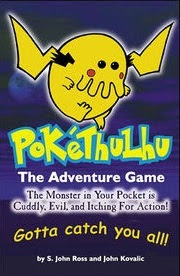
[review] Pokéthulhu; my first game as GM ever


Little by little that need of making this review grew on me. This is a 19 year old game, with 0,0 active fanbase or discussion nowadays, but that I have very fond memories of. It was the very first game I ever GMed. I remember I convinced my friends to play rpgs around 2009 or so, and when they said yes, I went home and printed it on a whim to play that very afternoon. I read the manual as I went, and used the introductory adventure hooks at the end of the book (it was 20 pages or so) to improvise a campaign. I let everyone draw their first pokemons and we started. I don't remember many details, but I remember some. 

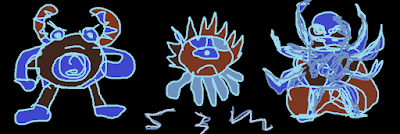
I drew a handful of pokethulus in a few minutes. I just sketched some shits on a paper, then added lightning, horns, extra eyes, extra anythings, fire, water, wings, tails and random weirdnesses and they were perfect. I was into the mythos while my players weren't; but I made a lot of references to them anyways, with one of the toughest pokemon being straight up ripped from Hellsing's Baskerville (one of the PCs captured without combat, with a lucky roll of a pokéball throw). There was a mechanic that incorporated making up quotes for the pokethulu fictional show in exchange for ¿successes? but we did away with that completely.

deviantart: geistvirus

The game describes itself as a joke game, but it manages to accomplish a lot of things right. Common checks for humans are d12 roll under, with easier tasks giving you more dice to roll, while thulhu combat is really cool while remaining simple. Each thulhu has up to two types (decomposing, fishy, fungous, icy, luminiscent, non-euclidean, squamous, sticky), a weakness to one of those types and three stats: power, speed and hit points. You have four choices for attacks: injure, dodge, trap or frighten. Each of them has a type adequate to the thulhu  and a number from 1 to 3 d12 to roll, under power or speed. 
The cool part is that you get to name/invent the nature of the attack, depending on the attack and its type. For example, the game lists Shub-Polywrath having a Non-Euclidean, frighten attack of 3d12. It is called Chest Swirl Display of Infinity. Mechanically it doesnt matter much: you'd roll 1d12 extra against targets who are weak to Non-Euclidean. But it is cool to know that if you choose to use your pet monster to frighten a clerk on some shop and succeed, the clerk is going to freak out gazing at infinity in the thulhu's spiral. There is a mechanical part which carries the rules, but is an analog, player made name which creates the effect. This is something that inspired me a lot and made the game very very easy to run. (The 3rd edition has an "official" pokethulu list, but when I downloaded it first there wasnt any, only a few examples)
I went as far as to implement Mythos-type magic when a PC found a forbidden book at the evil guy's lair. I gave his character a page with three spells that he could cast at anytime, each one once. I remember one of the spells "just" summoned a rain of blood. It was the kind of game that doesn't break for things like that. You can even play with the existing codes and give objects, places, people, etc types and weaknesses, such an squamous necklace or a fungous-averse library. But am digressing.


It is astonishing how well both of the settings mixed (pokemon and the mythos) answered the questions opened by the other. I have talked before on how Lovecraft's mythos are a great setting but hardly playable in my opinion in in a serious campaign. This joke game allowed me to play with them in a way that Call of the Chtulhu could not offer to me. In CoC, the King in Yellow is a book you read and makes you lose sanity, but you cannot really bring more info to your players about the city of Carcosa, the lake Hali or the King itself, as they are not described even in the books. You can only roleplay how your character goes slightly mad little by little. In pokethulu, you can rule that the King in Yellow is a book that allows passage to tattered Carcosa, where you can meet amd challenge the King into combat, steal some eldritch items and maybe capture some horrible fish type critters at the lake Hali.

On the other hand, it takes Pokèmon to its logical conclusions: What happens when pokemon turn against man? they eat their souls and marrow. Why kids get pokemon? because the world is hard and its always cool to have a friend with the destructive power of a nuke. Why only kids? Because you need a high sanity score to deal with thulhu and most adults (exception being some cultists) have a sanity score of 1. 
The implications of a world where the kids hold a power like that while adults cannot handle this madness and pretend that all this pokethulu thing doesnt exist is really really poetical, almost sublime. It fixes all the problems that modern-based fantasy settings have on a single strike, and I want to go back to this on further entries. 

suddently, all my art folder looks like pokethulhus


On the bad side, it is true that the rules gave some trouble eventually. I don't remember exactly what happened, but we found a way to break the game easily; maxing out speed + trap or speed + dodge or something like that. I think it wasn't hard to fix. I am re-reading the rules right now, after all this years and having discovered the old school D&D, and I cannot help thinking on how I would change this or that rule; lots of great ideas. 
* Stats for humans being rolled (1d12 with 9-12 defaulting to 4 instead of point buy). Buying stats at 11 or 12 made the characters auto succeed at everything from the start.
* human attacks (and other checks) being 1 dice only, lucky ability allowing 1 extra die + 1 extra if the task is easy or using an appropiate weapon or something, or taking advantage of somebody's weakness.
* Implementing hex travel, rations and pokethulu's travelling speed
* Statting pokethulhus a little lower; having 6d12 among attacks at the start for the some of the first owned pokemons is totally enough. We did it like this if I remember well.

I ram him with the bowsprit! you throw the pokeball!

I must say that the game has always been free to download, but the official web seems down, who knows since when. You can get it HERE, and there is also a web with resources in HERE. Nobody seems to know or have played this game, but from my humble blog I'd like to reccomend it to you all.

Edit: Some related link about somebody wanting to make a pokemon campaign focused on exploration.

sometimes, the line between what counts as a 
pokethulhu or a trainer is very thin. I could 
make this guy into both sides with little effort.


Wednesday, August 18, 2021

A spell list of pokemon moves


One of my long carried over projects is to make a game or D&D adaptation whose entire spell list is taken from pokemon. Basically to take the list of Gen 1 - pokèmon moves (back from when there were 151 of them) and rework them into spells. 

Many of them are explicit on their effects (flamethrower). Some of them might require some explanation, and some of them, which are redundant (Thunder, thunder punch, thunder shock, thunder wave and thunderbolt), can be reworked into more interesting things, so they are the place in which I can get creative with non-combat effects (for example, thunder wave might be used to magnetically seal a gate or whatever)

The great thing about this is that it feels a really new start, not based in the D&D list, to make magic fresher and personal. At the same time it has some constraints that, far from being adverse, are always the greatest helpers when building something great.

Interestingly, it allows for a very elemental-esque approach to magic, with all spells having someone that is vulnerable or resistant to it. One can make monsters based on elements, or trying to figure out to which pokemon element do D&D monsters belong. 

PC casters should not be elemental per se (they are treated like type: normal unless belonging to a specific race, like merfolk or harpies) though they can become elemental under certain circumstances (some spells or items, maybe?). Another good way to "pokemonize" this casters is to allow them to learn only moves of 2 different types, (beyond type:normal). Maybe monks can also work this way, by learning moves of type:fighting.

In the list I linked the moves are labeled as physical (causes physical damage) status (causes status alters, might be sort of magical) or special (more magical in nature). This and the movement type are to be respected a priori, though I might change my mind.


I find it very interesting that in the pokemon games there were no Dark and Holy types (though they added Dark shortly afterwards). This sort of paints the world as having no definite law and chaos, just a very strange and wild nature. Also there are oddly specific types like bug, ghost and three types of earth related elements (plant, ground and rock; with steel being added in the later generations). So there is no way to play a cleric in the usual version we know about. If we count them as being "those who drive ghosts away", a quick glance at the chart shows us that only other ghosts are super effective VS ghosts :/

Which element do you feel that a healing spell would belong to?
Which types would you grant to a medusa?