Showing posts with label magic. Show all posts

Monday, November 10, 2025

World of Dungeons: Pokemon Spirit Combat

In World of Dungeons, magic is done primarily by summoning spirits. Yet these are the only rules present for it. Wondering how I could expand it, and mostly, wanting to define some example spirits for a list, I ended up wanting to turn magic into Pokemon-style combat. As such, spirits should have a list of 1 to 5 abilities that provide either firepower (against other spirits or the wizard's enemies), defense (same) or some utility (MOs in pokemon, utility spells in all rpgs). 

Spirits are usually minor spirits, not named or unique (a rule that can be broken at any moment); some actually seek for a wizard in order to "level up" or spend their excess energy; others are too dumb to know they are being catched. Lawful-aligned spirits might want to help their own, while chaotic demons will take fun in corrupting their wielder. 

The template for spirits in the pokedex should be something like:

NAME: generic name for the spirit, but you can rename your own, why not?
LORE:  The most important points are: habitat, a common way to make contact in order to "catch" it, and its usual mood. The latter can influence how the spirit behaves on partial successes and failures.
ATTACK#1 (maybe something useful at low level)
ATTACK#2 (the rest of the attacks are learned in order)
ATTACK#3 (though sometimes there might be a choice in the order) 
ATTACK#4 (mostly on through the middle progress)
ATTACK#5 (the idea is to put the most gamebreaking ones at the end)

I had this idea that, when you command your spirit to do something (roll 2d6+mod) and get a partial result/failure, the attack may be at random. Roll 1d6 and if you roll over your intended #attack, it happens. Else, the spirit may do the rolled attack or just act on his nature.

The easiest leveling up method for pokemons spirits is to have them grow when their summoner does: each level up of the caster, he can/must level up a spirit instead of getting some or all their HP (actual amount to be discussed). This also sort of fixes the fact that fighters progress the same as wizards in World of Dungeons.

An important note on spirit combat is that spirits do not die when defeated: they are debilitated. They don't even track hp: Instead they have a resistance value: if they are damaged by that amount, they are "stunned" for a round. If they are damaged for double that amount, they are defeated and need to rest. Damage and armor work as normal, but spirit attacks have types (electric, holy, fire, ice, etc), and spirits have resistances and weaknesses to those types (this means less, more or maybe no damage)

The next entry will probably be some spirit prototypes.The more I think on this project, the more I see that this whole blog was pointing towards it since the beginning. (even these ff8 GFs tie in here somehow)


-------------------------------------------------------------------------------------- 


art by Suzuki Sarunobu

related (in my head) bonus: on the origins of the Miko

The origin of the Miko dates back to the end of the Jomon period (-14,000 to -300 BC) when women shamans entered into convulsions and trances to transmit the messages of the deities. Over time, they grew in importance, performing religious services and taking charge of various political and social activities.

From the Nara era (710 - 794), the political powers of the archipelago never stopped trying to regulate the activity of the Miko, to both control it and prevent abuse.

During the Sengoku period (1477 - 1573), the institution of the Miko also suffered from the chaos of the country and many priestesses brightened up in the country, becoming "arukimiko" - literally, "itinerant Miko" and exercising activities close to prostitution.

It was during the modern era, from the Edo period (1603 - 1868) to the Meiji era (1868 - 1912), that their role was gradually formalized, the practice of shamanism being prohibited under the Tokugawa while the imperial restoration prohibits any spiritual activity. 

The Miko that populate Shinto shrines today is easily recognizable. They wear a red hakama, the chihaya (white kimono top with wide cuffs), Japanese sandals, and quite often a hanakanzashi, a flower ornament that serves as a headdress.

They take care of keeping the shrine shop, offering omikuji, helping with the maintenance of the shrine, assisting the kannushi (Shinto priests in charge of the shrine) as well as performing the traditional dances, known as "Miko-mai".
 
It is often young virgin girls who hold these jobs, in the form of volunteer work or part-time work. They usually leave him when they get married.

There are several types of Miko, three categories if we follow the ethnologist Kunio Yanagita:

    jinja miko ("shrine miko"), the miko who participate in dances and rituals
    kuchiyose miko ("miko medium"), the miko who speak for the dead
    kami uba ("woman of the gods"), the miko in charge of the worship of the deities

The Miko has become, like other ancient symbols of the country, elements of Japanese popular culture. Often presented in manga with a broom in hand in shrines, they have the stereotypical figure of being temperamental and fierce.


Wednesday, October 29, 2025

Spell Hunters. This entry overrides all previous entries on magic in this blog.


www.sembrys.com/pixel-art 

More recent notes on my current rules. For context, attributes are this, with -1 to +3 modifiers applying to things: 

Strenght
Dexterity
Skill #1
Skill #2
Magic
Charisma
 
Let's focus on magic. Each attribute bonus gives you 1 Mana Die, plus one if you get the Wizard class. So, a Wizard with a +3 magic attribute has 4 Mana Dice. The second mana die is only active (but not the 3rd or 4th) when the magical operator is holding their staff; which is often given to them in an emotive ceremony, and signals experienced magic-users to the eyes of all beholders. 
 
Non-Wizard PCs with some magic bonus automatically get one spell slot, and can start with one spell on it. That is probably the last spell they will ever learn, so they don't have to bother with a spellbook.
 
Additionally, wizard PCs get one spell slot in their spellbook per level up, and can prepare spellbook/2 number of spells at a given time, rounding up. So, a "first level" wizard with +1 magic can know two spells, but have only one prepared. At the next level up, he knows three spells, but can prepare two.
 
I put "level" under quotations because I won't keep track of levels as such. I'm departing from that, and I have everything else that depends on them worked out (all such fixings are scattered through this blog). So, everytime somebody levels up as a wizard they just put a new line on their spellbook and sometimes a new slot on their prepared spells, that's it. 
 
*** ON SPELL HUNTING ***
 
Apart from that first spell at magic +1, the rest of the spells must be found in-game. This is, in-world, the classic adventure motivation for all beginning and intermediate wizards; and a good way to put a party in motion through a sandbox. 
 
The classic places in which a spell can be found are: 
* mystical shrines scattered through the land, or deep in dungeons; usually hard to access and guarded by pertinent traps and monsters. 
* taught from another wizard, monster, spirit or magical powered entity. The teacher must be usually convinced to or befriended, and might put you on a test of worthiness first. 
* spending downtime reading another wizard's spellbook or equivalent. This is done by passing a magic check during downtime. Only one or two spells can be learnt from a given spellbook; because magicians write mostly to themselves and is hard to decipher their mindset.
 
No more requirements should be needed, as learning a spell carries its own disadvantage: an empty spell slot on your spellbook is permanently spent on said spell, and it cannot be scratched away or unlearned.
 

*** ACTUAL CASTING *** 
 
 You invest any number of mana dice; the spell effects are commonly higher depending on the results, but if a 5 or a 6 is present at the roll, one mana die is spent. So, if you want big results you must use 2 or 3 dice, but it makes the mana easier to drain. The actual chances for losing a die are:
 
1 die: 33%
2 dice: 55%
3 dice: 70 % 
4 dice: 80%   
 
I´m currently working on the spell list but currently is an reworking of my old one into this system. Will update the new soon but if I waited for this entries to be perfect, I'd never update a shit. 
 
*** FINAL NOTES *** 
 
Charisma plays a role on magic by powering certain spells and influencing possible relationships with teachers or summoned entities.  
 
Mana Dice are recovered through rest but probably randomizing how many. For example, roll all lost dice and recover all that show 5 or 6. 
 
Classes are meant to be flexible, so you can level up each time as a different one (fighter, wizard, specialist) , but staying faithful to one makes it exponentially better. I'm actually very happy on how its done, will write it later. 
 
Magic-User monsters such as a Yuki-Onna work by PC rules: 1 to 3 mana dice, one spell (frost) unless it´s better to do otherwise.


Thursday, September 19, 2024

My problem with D&D magic

I must have reworked D&D spell list like 30000 times (the last, a radical GLOG-based attempt can be found here) For me, the way magic is handled is the great flaw of the game; and its biggest missed opportunity.

The greatest points of my gaming history have been when no Magic Users nor Clerics have been involved at all; when the game felt more tangible and, paradoxically, magical. For a while I just didn't even allow them, and it lead me to discover the primal affinity between Fighting Men and Hobbits.

I love Earthsea and the Dying Earth: the hate is not to the Wizard figure on itself, its just that I feel that D&D just doesn't do them right. It works awesome in combat, fighters are solid, every other class makes sense on the practice, but not magic people.

At first I thought, like you are possibly thinking, that the problem was Vancian magic (even if its just ripped of from the aforementioned Dying Earth stories). Now I am putting together a clean, personal rules synthetized from Greyharp's OD&D, and, inspired by this entry, I want to try what it proposes: classic vancian, but with MUs preparing only one spell per day. But then, I start to read the spell list and its all crooked to me. And I think that I've pierced on the problem: they are appropiate for a boardgame such as Heroquest, in which you have a determined drive (kill enemies on dark corridors) and this explains why Clairvoyance, Clairaudience and ESP only need to work just six feet beyond the MU, or why they can cast a Fireball in a given area in squares with scalable damage, yet lighting a bonfire or a torch is not possible RAW. Fireball deals area damage, and Lightning Bolt deals damage in a line.


For another example, divination, a great part of magic in real life and in all related media, is messy and fake through a whole sack of specific tricks (detect evil, detect traps, locate object, detect magic, detect invisible, etc) whose use must be preemptivelly divinated by the player so he can prepare by guessing the most important thing to detect. Together with the Clairvoyance, Clairaudience, ESP trio, they seldom have any use outside the dark Heroquest tunnel. And I get that D&D is about dungeons, but its not only about that. It's a game of adventure first, and world exploration and dungeons second. Spells should make the world feel vibrant, but they instead paint it like a bland boardgame. And its worse the higher level the spells get: Wall of Iron? Wall of stone? Wall of Ice? really? But there is more: can you picture getting to level 12 and getting to cast this boring shit? :


Because that is the underlying fact on all this: spells are designed to have a given technical specifications in dungeons but are pretty much uninteresting outside them, and not really interesting in dungeons when they are useful. On my opinion, not even combat spells are really needed: thats why MUs increase their to-hits and why they pair up with fighting men. I'd be more invested on a game where they have more utility or even social spells, increasing their use on cities and civilized areas, and less firepower, which they have never needed.

Last but not least, I'd like to remember why magic is in the game at all. It is not to provide gamist buffs. The game doesnt even need that. It is there because magic adds a mood to the game you are living into during the game. It adds the possibility of invoking fire, of unleashing a storm, of creating wonder. The best of having magic is the possibility of introducing wonderful, lush, evocative, epic, thrilling, a e s t h e t i c scenes through it.

I don't know if what I'm describing its even possible, or if I will be able to do it. But now I know a little better what I am pursuing, even if it makes magic irrelevant in battle or impractical in dungeons, though I am sure that all those concepts are not mutually exclusive. A list itself, God willing, will be posted shortly.


Monday, June 24, 2024

Trow Fortress 03: Spells & Magic

Based greatly on GLOG magic. No need to go read it however, my rules are self explanatory.

You have a number of spell slots based on your Magic score and your Class. 

1 spell slot per magic bonus (up to 3)
1 spell slot if you are a Magic User
1 spell slot if you are a Magic User of 12th level.

You automatically learn a spell for each spell slot if you haven't any.

Magic users can additionally write spellbooks: they can store as many as their level on them; and every time they rest, they can change the spells on their slots. Until the point in which they know more spells than their slots, they don't have to worry about that.

Anybody who knows at least one spell, has one Mana Dice (MD). Non-MUs will probably never have more than one if any.

MUs at third level get the right to bear staff (this is taken from A Wizard of Earthsea and I liked the implications it had on the books, making the staff act as a badge of office for the casters). So, whenever they are holding their staves, MUs have an extra MD (in the original PDF, Goblin Punch makes this bonus come from the wizardly robes, but I preferred to put the focus on the staff instead)

Independently from this staff bonus, they get an extra MD at levels 6 and 9. Some magical items may increase this number under some conditions.


S P E L L B O O K :

notes: 

references to turns are equally valid in combat, in dungeon or in overland travel. This means that spells will sometimes last during 4 hours and sometimes during 10 seconds with the same mana. This is intentional and I think it can work, I think it can represent how the caster behaves differently under stress than having time to make proper preparations, meditations and rituals.

I also dont use HP, with Hit Dice being the unit, and everybody getting a death save at 0 HD. Generally, MUs get two per level, while fighters get one. This has made me write carefully all the spells that do or heal damage.


BIRD: You become a bird of your choice (but always the same). You suffer double damage in this shape. This transformation lasts for [sum] turns. Every turn beyond that you must save vs paralyzation or become trapped in this shape.
Inventory slots decrease by 4, but the rest is transformed with you. The rest is lost. Use this table as a guide:

Robin: AC as plate, 24 miles per day
Crow: AC as scale armor, 100 miles per day
Owl: AC as scale armor, 50 miles per day. Good nightvision, bad dayvision.
Hawk: AC as scale armor, 200 miles per day. Consumes 2x turns.

HEAL:  With one dice, heal that 1d6 HD to one target, or 1 HD to 1d6 targets. With more dice, divide the results between HD and targets. Every target that is at 0 HD can make a new save, but no more than once (no matter how many casters try after this). This healing is often not true healing, but more a mix of luck, exhorting and praying so the wounds are not as bad as they look.

SHIELD: Duration: [sum] turns. Caster and whoever is near him gets AC = chain, + a chance to block all projectiles during this turn with a 5+ in 1d6. You can spend a MD to re-roll this dice once per turn.

LIGHT:  Duration: [sum+level] turns. The staff of the caster emits light enough to read. Investing 2 dice or more raises this intensity up to a car's lights, but consumes 3x turns. Without a staff, this spell doesnt light much beyond the caster's silhouette dimly. 

DISGUISE: Put an illusion over something to make it look like another thing. Both the real and the illusory objects or beings must have a trait in common: a characteristic color, a shape, a similar sound, etc. This lasts for [sum] rounds, though a result of 12 or more will make it "permanent". Still, all illusions will degrade over time by acting or being used in a way that doesn't suit the disguise.

FIRE:    For every mana die, 4+ is a success. 1-3 is the turns that this die will take to become a success. It takes 1 success to ligth something easily flammable, such as oil, a pinecorn or a torch
2 successes to put a firewall on a narrow corridor, or put flames on a normal sword
3 on a bigger area. When there is no actual combustible, the fire will burn for concentration + level turns.

Wizards that have attained their wands can shoot fire. Roll as many MD you like: the highest is the damage you deal (save vs half), the rest are the number of targets affected.


DIVINATION: This spell requires an oracle that you must carry with you (1 slot) and some time of rest. Every question you ask requires to invest one MD. The answers are always going to be single or composed NOUNS, never verbs or adjectives, nor yes or no; and the GM should be as specific as he can without breaking this restriction.
Every answer you reveive using this spell is then recorded on a vocabulary list that you forge little by little and that can contain a maximum of 6 words. Once you got all six, every question you make must be answered with one of that words or not being answered at all (whatever the GM thinks is more appropiate)
You could say its a spell that becomes less powerful as the mage does the opposite, and that is interesting. This is the reason for which some MUs need to find other MUs to contrast their readings, even if its less leveled up partners.

WINTER BLAST:   Invest one MD per turn to project a cone of cold wind towards an area, or down a slope. Everyone caught in there must save vs paralyzation every turn or be uncapable to move significantly this turn. A second failed save will also deal 2 damage by frostbite. A third failed save will freeze the affected character.
Every MD you lose casting this spell deals 2 frostbite damage to you. 

Cryomancers normally use Ice Wands which make MD exhaust only on 5+ or even 6+
Wearing heavy pelts adds 1 die to saves against this spell.

FOLD  Creates a pocket dimension in any small caché (inside a hat, behind a chair, etc) able to fit [sum] objects. On a 7+, the caster can fit on it. On a 11, it can fit a small group of people. Only one fold can be created at a time. The inside of it will have the appearance of a room, with traces of the place it is located. A fold created on a library will have bookshelves; one created on a stone corridor will have stone, and such. This is probably the way that some backrooms were created in our real world.

PROTECTION FROM EVIL:  Duration: [sum] turns. Is actually some version of turn undead. Undead, demons, evil and enchanted beings must save vs paralyze every turn to approach you, and even if they pass, you have +1 AC and +1 save against their special attacks. Monsters save alltogether, using the save of the highest one present. 

Once this spell is ongoing, you can roll one MD per turn to exorcize undead: deal [sum] damage to all or a single target, but if they survive they will attack that turn without the need to save. Intelligent monsters may check morale after this.

ASTRAL PROJECTION:: You must invest a full rest on this. If somebody interrupts you, the spell will fail. In the astral plane, physical distances are meaningless but everything looks like a semi-abstract painting (rothko + picasso + van gogh), so its a little tricky to decipher and navigate. Things as specific as something written on a note might be impossible to read, showing instead a symbolic image of the intention of the writer. For each MD you invest you can attempt one of these things:

*Search your way to some place, no matter the distance (1d6 to find: 4 to somewhere known, 5 unknown and 6 if partially hidden). Mind that some places have random encounters even in astral form.

*Find a detail in that place (as above). On a fail, something else might call your attention.

*Send a message to somebody, who will have an impression of you (the reaction and importance given to the message depends on the person)

*Cast a spell telematically.

Your armor and weapons get transported with you into the astral, but the kind of encounters there is mostly magical so that won't make much difference.

 FAMILIAR:  A nearby animal will come during downtime or if you are activelly searching for one. You can communicate quite well somehow, but lacks knowledge of human subtleties. This bond takes up one spell space.


Thursday, May 11, 2023

An idea for vancian magic


"Everytime you cast a spell, instead of losing the spell you just casted, you cross out any other spell of the same or higher level instead; unless that was your last available one, in which case, you lose that spell"

It doesn't really fix my quest for the perfect magic system, but it feels like an improvement towards the original: Now you can use the same spell more than once per day, which is how you would expect magic to work in any fantasy setting (except, of course, Dying Earth, from which vancian magic is taken). If I see a wizard casting a fireball, I would prepare against another fireball and try to close range with him as much as possible, so he cannot cast another one on me without hurting himself. In the D&D world, however, you are completely safe from another fireball, as you are sure he cannot even prepare the same spell twice.

Also I like that you can explain it as making the spell you cast becoming more and more present in your brain the more you cast it; the obsession feeding on the other possibilities you had prepared (the rest of the spells)

The problem I perceive is more "conceptual" than "gamist". But, on that side, it allows you to prepare a lot of absurd spells and burn them away once you feel that you are probably not using them that day. That, while using the ones you need without being unnecesarily stingy. I also like that it doesn't change the game at Magic User's level 1, but can be a gamechanger at level 3 or higher: Each new spell gives you much more possibilities on every rest.

EDIT: As you can see on the comments, I have been mistaken all my D&D life, and MUs can prepare spells twice (nowhere mentioned explicitly on BX but I was just assuming they couldn't). This is why its cool to have a blog, I'd still play like that if I hadn't talked about it here. STILL I think my idea is useful to allow casters to spam the same spell multiple times, while still giving them variety of spells at the same time. Are they too OP? maybe. 

Sunday, February 27, 2022

Schools of magic


image: twitter - @ahruon

From the gamist point of view, there are plenty reasons to divide magic into colors in an RPG

- increased replayability

- increased difference between various PC casters

- increased customization and sense of identity. Say that novice wizards start with one color, expert can add a second and masters can add a third That makes for organic character customization which comes up through gameplay, not at character creation. Much more if you pair it with all or some spells being "found" in-game.

- different types of wizards build world. Factions, tensions, zones on the map that belong to ones or others. The whole Kanto is built over making zones for each pokemon type, but the same can be said about Ravnica.

- the opportunity to create different legendary spells or magic items tailored to specific types, which can be quested for by their respective PCs. This type of "item hunting" is one of the best things you can have when you play a sandbox.

And, lets face it, I want to create something inspired by Pokemon Magic since ages. It's one of the best examples of good gameplay-oriented worldbuilding in history, and there is a lot to steal from it.

After thinking a lot about this,  I think that the correct number of schools for my project should be around four or five in the book, with around 10 spells each (lets say: 6 basic, 2 expert and 2 legendary). But instead of closing them in a wheel (as MTG does) keep it open so one could create custom schools or spells around any concept one should want (chronomancy, technomancy, etc. Sense of taste not included) while still being compatible with the existing lists. As I was doing my research, I found out that the uneven GLOG does "in spirit" much of what I am striving to do, but of course, I am going to do it my way anyways. 

So, first of all, lets see some examples of magic schools portrayed elsewhere.

You got eight of them in post-3e D&D: abjuration, alteration, conjuration, divination, enchantment, illusion, invocation, and necromancy. This particular case is interesting because types are defined mostly around their "role" in game: alteration and illusion are suited for adventuring tricks, conjuration and invocation are more suited for combat, with necromancy having a very defined use. To put it in a way, wizards are much more "pigeon holed" in what they can or cannot do.

Pokemon, on the other hand, is divided by theme (lightning, plant, water, etc) but the role of every theme is mostly the same: beat the other guy down. 

Magic the Gathering's five colors fits nicely between both examples: Colors have a solid definition in theme, and while all of them can take you to "zero life" they play wildly differently. And while they have limitations and specializations, they feel like they are built around a theme in-game and not around utility in a design room as 3e D&D does.

Ideally I want to conceive five wizard schools and try not to rip off MTG straight in the process. Five is a curious number to base something, as there are much lesser correspondences than with the number four (four directions, four elements, four seasons, four quadrants on an X/Y graph); though it is used on chinese systems (earth-metal-wood-water-fire) or japanese ones (wind-fire-water-earth-void). Also japanese use a five season calendar that divides summer into a rainy and a dry season.


So, to begin with, here is a table in which (you/I) can roll up some wizard schools. Your school spell list gets one spell for each type below, but for one that is unknown to them (roll). Two other types get one and two extra spells respectivelly, for a total of 10 spells. A school with three types of offensive spells is likely to be a very quarreling faction, while one that focus on alter the self or alchemy will look more like a sect of cultivators.

1 offensive (damage + certain status alterations)
2 healing (damage and or status alterations, including death)
3 divination (prophecy, ESP, commune-style questions, etc. Tapping into the "hidden" side of everyday things, such as travelling through mirrors or speaking with animals, also goes here)
4 summoning (other entities, forces or objects)
5 enchanting (alter things and people, also non-violent combat moves such as sleep)
6 altering the self (transformation or other power ups)
7 alchemy (preparing potions or other consumables, probably buffed in uses to compete with instant spells)
8 protection (any kind)


Now, roll two or three times for the themes of the school. These will help you give form to the spell list, and hint which forces or mythological animals power your advanced spells. Just forget for a while that these are the official pokemon types.

1. Fire
2. Water
3. Grass
4. Electric
5. Ice
6. Fighting
7. Poison
8. Ground
9. Flying
10. Psychic
11. Bug
12. Rock
13. Ghost
14. Dark
15. Dragon
16. Steel
17. Fairy
18. Normal

Suit yourself to choose what each of this words mean. Fairy in the pokemon game is used mostly as mind-alteration (which make more sense on the Psychic type IMHO) but it can be interpreted in a more open way and make it about fate, bending space and time and other works of elves and demigods. It feels natural to expand Ghost into necromantic/exorcist territory, while type: Normal is probably best used as representing animals and other beasts (druidic style)

Now roll twice for your thematic colors

1. Red
2. Blue
3. Yellow
4. Orange
5. Purple
6. Brown
7. Black
8. Green
9. Pink
10. Indigo
11. White
12. Emerald
13. Lavender
14. Turquoise
15. Gold
16. Silver
17. Bronze
18. Cyan
19. Magenta
20. Go monochromatic.
You can always choose this instead of any result. If this is your only result, roll again.

EDIT: link to Dont worry, I've got a Sword where the author has worked on the same topic.

EDIT 2: 8 Schools of Magic by Reckless Dweomer


Tuesday, February 8, 2022

The Gender of Magic


It came upon me that there are two kinds of magic users. 

There is one kind that goes out exploring, learns spells and throws fireballs from a staff. This is the one we model in D&D. They activelly seek to get into the monster's lair and take out their magic loot. This is Gandalf, this is the Dying Earth guys and also any wizard you see casting Bolt2 in Final Fantasy games. You can even argue that White mages and Priests from Dragon Quest belong to this group. Kvothe from The Kingkiller Chronicles does not have a staff, but it's otherwise a perfect example. Their magics are visible and obvious; immediate. They often embody the concept of Glass Cannon (fragile but potent combatants), but still a cannon. They are the Yang (or male) side of the casters, and we usually call them wizards. They often learn their craft by reading books in posh wizard colleges or equivalents and in their extreme variant do not require any special inner wisdom: just memorizing shit and repeat some words boldly. Their magic tends to have very clear rules for casting, very scientific with little mysticism.

The Yin (Female) kind also appears much in fantasy, but rarely in the form of main characters. Yin implies a degree of passiveness, so they are not specially suited to star in an adventure book, though they might fit better on more introvert, small-scoped novellas. Yin magic users do not cast flashy spells, but rather do things like influencing others or preparing potions. They are not usually adventurous but stay at home; sometimes for years or for life, improving their magical skills often in solitude. Their magic is not "shot" but instead often requires a degree of intimacy. It also works subtler and slower: they seduce, think, trick, deceive and plot to get their goals, to the point that sometimes it's not clear where the manipulation begins and the magic ends. We usually call this casters witches, and when they appear in a story is very likely that they are helping characters or villains. Rhea de Coos, Malefica, or the Fairy Godmother. Though they're often women, some male mages in fiction embody this archetype, for example Merlin in his mentor facet, Flagg from Eyes of the Dragon or Jafar from Aladdin.


In rpg games we usually play wizards. I don't think there is nothing bad at it: they just work better for what D&D does. Playing a witch is a little more difficult. Mind that if what she does in-game is to shoot elemental spells and go killing monsters 4 loot you are essentially playing a female wizard. The very act of being an adventurer is Yang on itself, while Yin would be concerned to introspection and travelling "the world inside you" (which can be awesome on itself but not an usual part of D&D). Yin wizards are present as NPCs such as antagonists, the alchemist hirelings or the potion sellers. 

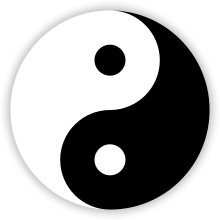
But as the Tao shows, Yin holds Yang inside and viceversa. So every single thing, and every magic user in existance has, of course, a little bit of both. To traduce this to rpg mechanics: If we assume both approaches of caster to be the same class (Magic User), how likely is that a Wizard can cast lots of spells, but require an alchemist to prepare a potion for them? and how likely is that said alchemist has researched lots of potions that are EVIDENTLY MAGICAL, but hasn't cared of learning a single level 1 spell? I think that the lines should blurr a bit in there. Still struggling to make my "perfect" magic system/class, and got stuck thinking about this. Ideally, a class should let you advance your character on either field, instead of making you choose between artificially created distinctions like "the Wizard class" or "the Alchemist/witch class". I've found this documents that might serve as inspiration in future attempts to create it. The challenge is that the more you push a character to become a "brewer" you put more emphasis on downtime, which might not sync well with the biorrhytm of the rest of the party. 

There are, of course, some tricks like making potions "quantum" (as in, you are given X potion points each downtime, then you spend one point to produce a potion that "you always carried with you"). To make this ability organically mixed with the "fireball gun", magic users could choose to learn a potion recipe instead of a spell, with potions being more potent than level 1 spells, but not more than level 3 spells. This way one could advance freely between the wizard and witch concepts, while having a good reason to specialize in potions at the start of the game (more potency in exchange of more complexity) and a good reason to not do it (more spells, in the end they might be more useful, you never know). Also with spells get more powerful the more level you have (such as magic missile) it might compensate little at the start, but a lot when you are level 10 or more. 

And, for closing, let me ask you a question: do you feel that you have ever played a "witch", in the Yin sense of word?

Thursday, January 27, 2022

Magic system sketch v2


After all this time, I've still haven't found a magic system that I like 100%. This is the current iteration I am working now. Numbers are made to fit with this other previous work, though they can work with any rules using roll-under, under a magic stat such as wisdom or intelligence.

Wizards grow in 2 fields:

# of Spells and Magical skill

There is a magic skill, lets say X in 6, that grows as the wizard gets more powerful. 

Using certain magic items (like oracles) passive reactions (like detect magic) or small magic effects (cantrips) uses a roll of this to work. Wands also use this as primary factor of power, I will explain soon. 

# of Spells is very reduced, even though if spells themselves are more "versatile" and should not have a single, ultra-specific effect.I want to limit it to four or five even in very powerful wizards. More spectrum is added by gathering items (jewels, wands, etc) that allow casters to have more repertoire. This magic items are not too overpowered because they need a good magic skill score to work, so it is fine. It is hinted in the books that Gandalf uses fire thanks to the elven ring he carries; so wizards having lots of power and not many spells has basis on the holy fantasy books.


This is a hint on how this could work:

Lets say you have a spell list of 2: Heal and Cold

You use the Cold spell to deal damage, so you roll 1d6 and check your magic score (3)

If you roll under or equal your score, you take that number of HD from your enemy or enemies (you decide how this damage is divided). Lets say that the Cold spell has a side effect or alternate effect of slowing enemies down: then everyone affected rolls a save or is paralyzed. At 0 HD they are frozen permanently until defrosted. 

Having more level or good gear might increase the number of dice you roll: If you roll multiple d6, treat them separatelly

If you roll OVER your magic score, then the result is assumed to be equal to your magic score (3) but either the spell is lost if all dice are over (like a vancian system) or you lose magic die which roll over (making energy decrease instead, instead of making spells deplete separatelly)

Depending on the spell, the number rolled can be interpreted as HD of damage, yards, meters, possible individual targets or just an abstract degree of effect (up to the GM to decide the spectrum of effects on all results from 1 to 6). 

A very interesting interpretation could be to make a spell (for example, CHARM) be able to target a monster with HD equal to [number rolled + wizard HD]. So the spell always works with monsters under the wizard's HD, and makes a nice progression for spells to grow up in power as the wizard does (per BX rules, sleep, charm or hold person have hard caps on which monsters can be affected based on HD or size, but seem a little arbitrary and make you wonder: why is a dragon never affected by a sleep spell, EVER, no matter the wizard's skill? it seems something that could happen on a fairy tale. Why not in a D&D game?

So, wizards get exponentially better as they raise their magic score, which is something I activelly want. My idea is to make multiclassing possible, but mathematically sub-par. Having one fighter and one wizard should render more "powerful" characters than having two fighting-wizards, even if the latter might be useful in some situations. 

Having made this, only one more task remains: to make a provisional spell list to be tested, and deciding what kind of effects can be used as cantrips or produced on a different way.

One idea is that both HEAL and COLD, as do FIRE or BOLT, can produce light under certain conditions (for example, when used by a "magic score=3" wizard who is carrying a wand). This way, you can have spells produce lights of different colors depending on the wizard's favored powers (just like jedis have different lightsabers)

Another one is that spells give you both active and passive abilities.
Having mastered the HEAL spell means that you must be a very lawful or righteous person, so you have a +1 to turn undead.
Having mastered the COLD spell might give you a passive resistance to cold temperatures, and so on. 


Ah! I almost forgot: Wands allow certain effects (such as light) but magically imbued wands give you an extra d6 when rolling to their favored spells (Wand of cold gives you an extra 1d6 when casting cold, for example). This die never depletes unless you are one of those sick people who makes wands a depleting resource.

Here is a big good list of spells alongside the cantrips/passive bonuses they grant to the caster that memorizes them. While I make my own list (the real tough work) this can serve as inspiration

Wednesday, August 18, 2021

A spell list of pokemon moves


One of my long carried over projects is to make a game or D&D adaptation whose entire spell list is taken from pokemon. Basically to take the list of Gen 1 - pokèmon moves (back from when there were 151 of them) and rework them into spells. 

Many of them are explicit on their effects (flamethrower). Some of them might require some explanation, and some of them, which are redundant (Thunder, thunder punch, thunder shock, thunder wave and thunderbolt), can be reworked into more interesting things, so they are the place in which I can get creative with non-combat effects (for example, thunder wave might be used to magnetically seal a gate or whatever)

The great thing about this is that it feels a really new start, not based in the D&D list, to make magic fresher and personal. At the same time it has some constraints that, far from being adverse, are always the greatest helpers when building something great.

Interestingly, it allows for a very elemental-esque approach to magic, with all spells having someone that is vulnerable or resistant to it. One can make monsters based on elements, or trying to figure out to which pokemon element do D&D monsters belong. 

PC casters should not be elemental per se (they are treated like type: normal unless belonging to a specific race, like merfolk or harpies) though they can become elemental under certain circumstances (some spells or items, maybe?). Another good way to "pokemonize" this casters is to allow them to learn only moves of 2 different types, (beyond type:normal). Maybe monks can also work this way, by learning moves of type:fighting.

In the list I linked the moves are labeled as physical (causes physical damage) status (causes status alters, might be sort of magical) or special (more magical in nature). This and the movement type are to be respected a priori, though I might change my mind.


I find it very interesting that in the pokemon games there were no Dark and Holy types (though they added Dark shortly afterwards). This sort of paints the world as having no definite law and chaos, just a very strange and wild nature. Also there are oddly specific types like bug, ghost and three types of earth related elements (plant, ground and rock; with steel being added in the later generations). So there is no way to play a cleric in the usual version we know about. If we count them as being "those who drive ghosts away", a quick glance at the chart shows us that only other ghosts are super effective VS ghosts :/

Which element do you feel that a healing spell would belong to?
Which types would you grant to a medusa?

Wednesday, August 4, 2021

magic system sketch


Following the guidelines of previous entries, I'm devising some possibilities to simple and cool magic systems.

I want magic progression to follow a 4-step, exponential structure; from non-magical, to initiate, mage and archmage (and diminishing gains after that if any). 
Magic, then, is cast from a list of spells that increase in number on every "magical grade", but also in power.

What I have for now is this:

Initiates roll 1d6 when casting spells
Mages roll 2d6
Archmages roll 3d6

and spells have three parameters to be measured:

Impact (how many hp you heal, damage you do, effect you cause, etc)
Range (how many people it affects)
Retain (decides if the spell is retained after use or not)

As I want that there are mechanical benefits to casters to disregard armor, I made it so wearing armor or other encumbrances decreases the chance to retain spells: you must roll your movement rate or under to keep the spell.

Sample movement rates:
No armor=2
Light armor=1
Heavy armor=0

Initiates roll 1d6 to cast magic. So when an initiate rolls a heal spell, the result defines all parameters; but one from impact or range is defaulted to 1:

Lets say he rolls a 4: he can choose to heal a target 4 hit points, or heal 1 hit point to up to four targets. As he rolled over its movement rate (no armor=2), the spell is lost.

Mages roll 2d6 to cast magic. They can allocate the results anywhere they see fit from Impact, Range or Retain. A parameter which has no results is defaulted to 1, and if its Retain, its automatically lost.

Mage in no armor rolls a 4 and a 2 when healing: He can choose, for example, to heal 4 points to a target and keep the spell (2 is equal to his movement rate); or maybe he can heal 2 points to 4 targets and lose the spell.

Archmages roll 3d6 to cast magic. They are, of course, benefited from allocating low rolls on Retain and high rolls on effect. 

Archmage in light armor casts heal and rolls 3, 3 and 1. He heals three points to three different targets, and as he keeps the spell, he can attempt it again next turn.

Now the base is established, lets get to the fun spare bits:

* Some spells make no sense in having a numerical score for Impact, but they can be described differently depending on the result assigned to it (from an 1 to 6 score, how much does "Magical Light" shine into the cave?). On others, where the result is a matter of yes or no (charm, sleep, maybe) the Impact roll can measure the number of turns affected, being a threshold that you must reach for the spell having an effect (like in "sleep needs a 3 at least to kick in") or just having the spell work straight, and making it more a matter on "how many people you sleep" (effectivelly putting the weight on the Range score)

* Mages and Archmages revert to 1d6 lower if they are for any reason deprived from their magical wands (I'm a great fan of Earthsea novels)

* Spells can be learned multiple times. This is the way in which a forest nymph (Initiate level) would cast Entangling vines many times before retreating.

* Things that complicate this structure further must be treated on a case by case basis, described on the specific spell description.

* Casters can attempt to cast spells reactivelly: when they are attacked, they can attempt to cast a spell before the attack takes place. This is done by casting normally, and if the Retain is successful, the spell is cast before the attack. If the Retain is lost, the spell takes effect after the attack (if the mage is still alive and any other conditions allow it). In any outcome, this consumes the casters' turn.

*It is weird that mages can only cast spells on groups of 6, no matter their power, huh? To fix that, having a range of 6 means you cast the spell on all the group you select (all foes, all allies, everyone but a single person... its your call)


Friday, April 16, 2021

Charm, Sleep, Fear, Confusion

Writing some spell lists, I've come to think about D&D's mind-altering spells in particular. Charm, Sleep, Fear, Confusion. 

They all have the potential to be encounter-skippers. Then, why choose one over the other? 
In the rules the differences are subtle: Charm might give you a temporary ally, so does Confusion by making an enemy so confuse that attacks itself or its allies. Sleep might affect more enemies. Fear makes the target flee, carrying away all treasure they might hold.

But in practice, rules as written, they speak more about how the enemies act than on how they do feel. For example: by casting fear, an NPC will never react to fear by trying desperately to befriend you, like in a charm spell (so you spare his life) or channel the fear attacking, but awkwardly, like in a confusion spell. RAW, they will always flee. So the spell effect is not as much about what does the target feel, its more about what they physically do.

So, a wizard learning Fear in wizard school, dreaming of the day in which he will subdue armies at his feet using magical fear, will be dissapointed because fear will only send them fleeing from him,

I'm thinking on having all those spells somehow mixed in one. Lets call it "Ensorcell".

When you cast it, you change the reaction of target NPC 2 steps up or down the Reaction Table. That is the effect. It's the GM who, depending on the reaction and the situation, describes which is the magical effect who caused it. Lets say that the Reaction Table its like:


A goblin who is attacking you (Immediate Attack) would be hold for some turns (confused). The GM says if its because of fear, daze, tiresomeness or maybe he is tripping balls.

A hostile one (roll of 3-5) would retire its attack completely. Maybe he is asleep or just lost his will to fight. He might not get in love with you, but will be opened to negociation.

If the monster is undecided (6-8), then you have the chance to make it your pal/waifu, as a classic Charm spell.

Possibly you can increase the power of this spell somehow, to make an Immediate Attack become an Enthusiastic Friendship by casting it twice or whatever. 

Now, I can imagine the same wizard in wizard school, memorizing lots of different theorems and tricks to be capable to ensorcell enemies someday, and adapt his spells no matter the situation. 

The bad part of this approach is that, when cast on PCs, it lacks guidelines on what should happen. The GM should interpret it based on the shown attittude of the PC towards the caster and interpret it as it was a reaction roll.

Monsters that normally cast effects on PCs, such as sirens or vampires, still work normally casting Charm or Fear, and should affect PCs just as they do in classic rules, no matter what is their attitude. They are monsters after all and work outside the PC's rules.