Tuesday, May 21, 2024

Joshua K about bad things

This is an article I liked written by the aforementioned, at his instagram: Immersive Dungeon Delving. I wanted to share it here because I think it has some truths on it. All credit is his, enjoy.


What if instead of thinking "why do all these bad things keep happening TO me?," we instead think "These bad things are happening FOR me?" How would that change your life? 

Everybody faces challenges in life but some have a harder path than others. Is that fair? No, but what is hard for some is easy for others. It is relative and depends on your thinking and past experience. For some just driving in a big city is a challenge, for others it is "Tuesday." Some people suffer serious stress when a stranger yells at them, for others fighting two men at the same time is just another day at the Dojo. Maybe we actually need problems to gain perspective? 

Just like a 1st level PC may struggle fighting off a couple of kobolds where as an 8th level PC may just laugh at them. To be honest, we as people NEED problems, because without them we will create them for ourselves. How many times do we see rich people who have everything and every chance but are still unhappy, jaded, and plagued by self created problems? 

In old-school D&D we often see a sandbox type campaign where the adventures are PC driven and things are not always fair. The DM must be objective revealing the world as the PC's engage with it. The adventure "story" develops through PC perception as they create meaning to events and the DM enacts consequences for their actions both good and bad. Without the "problems" of kobolds, dungeons, traps, and dragons, it would be a boring game and no one would raise levels...or have a chance for self development. Kind of like real life where the kobolds are a flat tire and a dragon the tornado. 

Adventures are made of problems laid out FOR the PC's by an objective DM for "fun" to play a game. Just like jumping out of a plane can be either a problem or fun. What if life is full of problems set by an objective universe to help us...well...level up? Such proactive thinking allows a mindset to tackle challenges head on instead of falling into a "victim mentality" where everyone and everything else is to blame for ones problems. The question then becomes what kind of adventurer do you want to be in life and what is stopping you from becoming it?

Art by NerdyFrida 

Friday, May 17, 2024

Trow Fortress 01: Character Creation and Advancement

When you play at my table, you start like this:

1. CHARACTER CREATION

1.1 Attribute Scores

Roll 3d6 in order for Strength, Dexterity, Background, Magic and Alignment. You can swap two of them if you want. Attribute scores will probably raise a little during the game. The bonuses work like this:

18: +3
16 or more: +2
13 or more: +1
9 or more: +0
8 or less: -1

Strength adds (or substracts) one HD for each bonus (which in turn, at certain numbers, modify the attack bonuses. More on this on the COMBAT chapter). It also modifies your "Open stuck doors" roll, which is a catch-all for brute force tasks, by 1 step per bonus.
Strength is very important for non-fighters too, as it is the measure of your charging capacity: you can carry slots equal to this score without being encumbered (MV or Movement 1 instead of 3) and only 3 more objects after that.

Dexterity adds one expertise per bonus. Some are combat related, some are more about agility: The  current list is (bear this lack of context for now):
Fencing: When you are attacked in melee and your opponent rolls a 1, you get an extra attack against him when using a one-handed sword. Doesn't work while using a shield.
Marksmanship: You can spend a turn aiming with a type of ranged weapon. On the next attack, you can either do an extra 1d6 damage if it hits, or raise advantage on an attack that missed (basically adding a d6 or substracting the disadvantage if you had any).
Ninjutsu: You roll an extra d6 for all movement and stealth rolls.
I hope to come up with better names at some point. If your bonus is negative, your movement becomes 2 instead of 3 by default

Background: There is a list of backgrounds but you can make up your own with your GMs approval. This score evolved from the concept of Intelligence, though it specifically represents how well you perform your background skills: Ranger, Alchemist, Thief, Sage, etc. are some examples. You roll die equal to your bonus, and normally a 5 or a 6 are hits depending on the action.
If your bonus is 0, you roll with disadvantage (roll 2d6, keep worst), and if your bonus is -1, you get double disadvantage (3d6 keep worst).
If an action can be attempted by characters without the relevant background, they roll at double disadvantage too.
Your background doesn't have to be chosen at the start, it can be chosen during the game and its probably useful to do so.
Once per character, you can produce an item at any point that is related to your background, no matter the shitty bonus you got on it.

Magic: Each bonus you get here means that you have a new spell slot. This is the only way magic is available to non-wizards. More on this on the upcoming magic chapter.

Charisma: you can have ONE faithful retainer per each bonus, so zero for average people. Retainers can be people and animals at first. They don't have to travel with you, but they might be a king or a princess at a given city: you know they will always vouch for you. Spirits or "Gods" can be befriended this way: some can be summoned if the character has Magic Dice, and some can provide passive benefits. Charisma also affects loyalty

Constitution: We don't have this one. On a natural way, my players have end up calling "constitution" to their HD amount, so I ended up doing the same (I know that HD/HP are not just meat points and represent more things beyond mere sturdiness of body, but I don't want to argue with them)

1.2 CHOOSE CLASS

Once you have your stats rolled, you must choose your class from the only three that are available at the start (I haven't ever needed more yet): Trow Warrior, Wizard and Kobold. (Kobolds are just hobbits by other name, while Trow are basically humans)


TROW KNIGHT: Start at 3 HD. Can use all weapons and armor.

Level 01: save dice: 1,  3HD
Level 02: save dice: 1, +1 HD
Level 03: save dice: 1, +1 HD
Level 04: save dice: 2, +1 HD
Level 05: save dice: 2, +1 HD
Level 06: save dice: 2, +1 HD
Level 07: save dice: 3, +1 HD
Level 08: save dice: 3, +1 HD 
Level 09: save dice: 3, +1 HD
Level 10: save dice: 4, +1 HD
Level 11: save dice: 4, +1 HD
Level 12: save dice: 4, +1 HD
Level 13: save dice: 5, +1 HD
Level 14: save dice: 5, +1 HD (maximum natural HD: 16, with probable Str increments)


WIZARD: The spell system is based on the GLOG, though I had to tone it down its power a bit. I think its partly my fault as my spells tend to be more powerful or versatile. The 5 mana dice that Goblin Punch awards by level 4, I make it into four at level 9! Their maximum number of spells memorized is five (one at start, other at level 12 and three at differing grades of MAGIC score) which I love because it suits the lore of the Dying Earth books, in which the top mages could at most learn five spells at the same time. Wizards really benefit from a good magic score, so consider swapping your best score into it if you want to play one. Crippling any other score in the process is thematically appropiate.

Level 01: save dice: 1,  2HD and one spell slot.
Level 02: save dice: 1, +1 HD
Level 03: save dice: 1, Can wear a staff (+1 Mana die)
Level 04: save dice: 2, +1 HD
Level 05: save dice: 2, +1 HD
Level 06: save dice: 2, (+1 Mana die)
Level 07: save dice: 3, +1 HD
Level 08: save dice: 3, +1 HD 
Level 09: save dice: 3, (+1 Mana die)
Level 10: save dice: 4, +1 HD
Level 11: save dice: 4, +1 HD
Level 12: save dice: 4, (+1 spell slot)
Level 13: save dice: 5, +1 HD
Level 14: save dice: 5, +1 HD (maximum natural hd: 11)

Wizards can prepare 1 spell per slot, but can have as many in their spellbook as their level. Until you have more spellbook than slots, you don't need to worry about even having a spellbook.


KOBOLD: +1 AC versus enemies larger than a Trow, and +1 save die versus breath, spells and traps. Their strength is, however, capped at 12.

Level 01: save dice: 1,  2HD, Stealth (on a 5+, Hide in Shadows or Move silently)
Level 02: save dice: 1, +1 HD
Level 03: save dice: 1, +1 HD +1 Stealth dice,
Level 04: save dice: 2, +1 HD
Level 05: save dice: 2, +1 HD
Level 06: save dice: 2, +1 HD, +1 Stealth dice
Level 07: save dice: 3, +1 Background
Level 08: save dice: 3, +1 HD 
Level 09: save dice: 3, +1 HD, +1 Stealth dice,
Level 10: save dice: 4, +1 Background
Level 11: save dice: 4, +1 HD
Level 12: save dice: 4, +1 HD +1 Stealth dice,
Level 13: save dice: 5, +1 Background
Level 14: save dice: 5, +1 HD (maximum natural hd:12, str increments impossible)

1.3 RANDOM PROGRESSION:

Everybody uses the same progression charts, but advancement is deliberately a bit chaotic so all PCs advance at different times: The requirements are deliberatelly small, but there is a trick: when you have the required XP, spend that amount (substract it from your sheet) and roll d6: On a 4 or more you level up. On a 6 you also raise any attribute by 1.

level 1: 0
level 2: 450
level 3: 900
level 4: 1800
level 5: 3600
level 6: 7000
level 7: 15000
level 8: 30000
level 9: 60000
level 10: 90000
level 11: 120000
level 12: 150000
level 13: 180000
level 14: 210000

The explanation for this rule is given here.

Tuesday, May 14, 2024

Trow Fortress 00: Prelude; or "Why halflings are kobolds?"

This started as a way to remove damage rolls on BX but still having variable damage, using d6 only. Now, two years later, has shaped my current houserules into something I am very confortable running, and I don't plan on going back. At this point, I don't think I can call it "modified BX" anymore, even though I still keep the book by my side on every session; but mainly I take everything from a small, yellow notebook where I keep my notes.

At this point, the notebook is too big (and also written in spanish hahaha) to be transported to an entry in a single sitting, so I made up my mind to start doing it bit by bit; maybe mimicking BX index to follow some order. It may help to have it written someplace in a "clean" form, in case anybody wants to follow the "camino de la verdadera salud" of the all d6. I will shortly proceed to delete some old posts with obsolete versions of this rules, so there are no confusions for readers. Let this be the preparation of -who knows- a future serious publication. At the very least, this is required reading for anyone in order to understand my houserules from now on.

As my equivalent of an introduction, excuse me if I skip the classic "what is an rpg" section, or forfeit explaining dice nomenclature. I'd rather explain two key parts of the setting. And here it goes:


WHAT IS A TROW?

Trow are in all practical and biological ways humans by other name. Humans just do not exist in Trow Fortress. You have Trow; and this might seem non-sensical to you but I can only tell you about my setting as I "perceive" it.

Trow are a warrior race. They organize themselves on feudalistic hierarchies where every city is run by a Lord, which may or may not be supedited to a higher ranked one such as a japanese Shogun; or in opposition to it or other Lords. (Following the feudal japan analogy, the existance of some divine emperor/empress is still something I am figuring out)

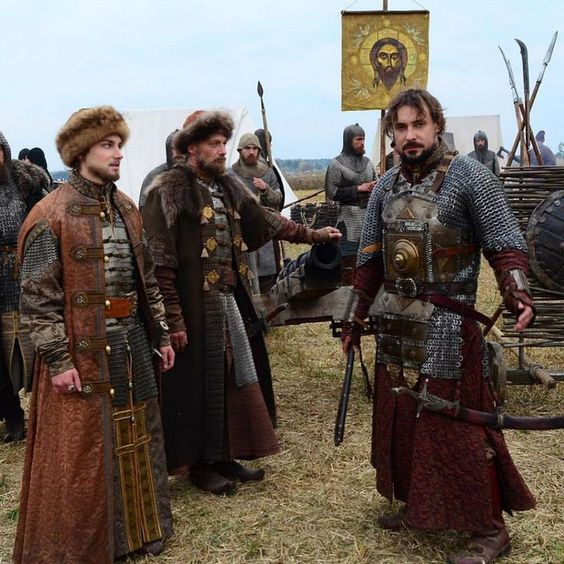
Aesthetically, they dress and behave like a mix of Joseon dynasty Korea, the mongol steppe nomads and the cuman warriors. Expect lots of hawks, composite bows, scimitars and lance charges. Even secular trow such as sages or stonemasons have probably been warriors once.

On the other hand, and with the proverbial exceptions, trow women become either housewives and/or take non-warrior professions: healers, artists, artisans, animal trainers... It is common for parents to arrange marriages to secure a good future for their daughters (or, sometimes, use them as a currency for some benefit). The opposite distribution is true for trow magic users, if we take into account that temples and shrines are almost always mantained by priestesses, and that their society will inevitably push young males towards the martial branch.

Trow live in the titular fortresses. Every city is walled, preferably in stone; and holds a castle inside. When possible, the cities are built against a mountain, which allows part of the city to be excavated. Though they are not "paladins" of any sort, they do have unwritten codes of chivalry that speak of their honor, honesty, valor and loyalty (mantaining them is up to each one, or to their "alignment", we could say)

In every feudal arrangement, the most numerous group at the bottom of the caste pyramid is the serfs. Trow do not plow the lands. They use Kobolds for that. The symbiotic relationship of Trow and Kobolds, where the first give protection to the second in exchange of tithes is a constant in the world


artist unknown

WHAT IS A KOBOLD?

Kobolds are your classical hobbit by other name. I started calling them like that at a given point because it seemed appropiate: thats how germanic peoples called the domestic helpers who lived amongst them; those that could perform trickery, but also house labor and many tasks if treated properly. Well, that's a little bit like how the trow see their kobolds.

This little folk are about 3 feet long (91 cm for euro peoples) who do not actually need trow to survive: They are a rough race which has conquered many wildlands, and you will sometimes find kobolds where no trow has dared to go. I picture them a little bit like the settlers who went to conquer the american west with an axe in one hand and a mule on the other. But you will indefectibly find one of their settlements around any Trow Fortress. 

It is not that they are crazy for breaking their backs, but normally they enjoy the working life; and, when they feel they are being justly compensated, they put love into it. Kobolds know how to grow orchards and how to preserve their fruits; how to grow crops, and how to turn them into bread and brewages. They are good at hunting (preferring the bow) and fishing, and love to build small canoes to do so in big rivers and lakes, installing steady campaments along a river course. Others travel great lands practicing transhumance of buffalos and big goats that are normally mounted by their shepherd. 

Their clothes are usually plain and humble, classically wearing combination of cloaks, viking ponchos and chullo hats. They do not build in stone, but on wood. The central point of their cities is often a wind or a watermill instead of a temple, around which they gather for their seasonal celebrations (that are completelly independent of the trow calendar). Normally a kobold family shares an occupation together. And sometimes, kobolds are sought by trow as personal assistants such as valets, porters or squires. When they do adventure alongside a trow, chances are that is his faithful retainer, though it doesn't have to be the case. Sometimes kobolds form adventuring gangs on their own accord, and is not rare that, given their natural skills to hide in shadows and move silently, some of them turn to crime and theft. 

Note he genesis of Trow and Halflings as a team dates back to this 2012 entry on class-as-race, which now is "semi-canon" lol.

ig: varguy


Tuesday, April 30, 2024

Underground Doctors (a monster)


"The ones in the left and the right are doctors. They are healing the one in the middle, who was sick and had blood. The doctors have put an eye on the wound and have healed it" said my three year old daughter explaining her work.

I can't help but wonder. How many fights has the doctor on the right been on to be so toppled with eyes? What is the mysterious ball that the left doctor is holding in his/her arms?

MAGENTA SLIMES A.K.A. UNDERGROUND DOCTORS (Slime, Neutral), stats as B/X

Armor class: 9
Hit Dice: 2* (for each 1 rolled when finding HP, the doctor gets an extra HD and an extra eye)
Move: 120' (40')
Attacks: 1 strike, 1d6
No Appearing: 1-6 (2-12). On a group of 6 or more, there will be a leader with 1+d6 eyes.
Save as Fighter 1
Morale: 8

These slimes are around 1 to 2 feet tall, but their constitution is sturdy: dense as solid mud. They do not have a mouth and are for the most part quite silent, but at the same time they are highly intelligent, able to roughly understand the PCs if they use gestures. They form small "clans" on caves, where they settle around a "cave of eyes": a location where their shaman has some kind of plantation where 1d6 (artificial?) eyes are sprout from the moist rock, and many more are in the process.

They are not violent but are territorial and may attack to keep invaders away from their lair, or just as part of their martial training. They will do hit and run attacks, covered by surprise, and then run away hoping their victims get the message and turn back. If things go bad, they trust their shaman to bring them back to health with their Eye Healing.

When the shaman puts one eye from his?/her? harvest into a fatal wound, it closes and the treated slime regains 1d6 hp instantly. One or two shamans, who carry a blue ball as if it was a symbol of their position, are always present on a lair (2 in 6 chance to be on a wandering monster group). The shaman will not attack at first, but wait and run away towards the cave and fetch some eyes if he sees that a fellow member has fallen. A PC that has been dropped to 0 hp or less can be treated with eye healing, but will only regain HP on a roll of 6; and the eye won't catch functionally into the body. Eyes will also lose their propierties if carried for more than one day.

The defining act of a shaman is developing the ability to plant eyes in stone. This is done through a (very slow) variation of the Stone to flesh / Stone to mud spells, applied to small portions of rock. This means that in case of need, they can de-petrify any being that has been turned to stone, though it will take a full day's work for a shaman, or half of it if aided ritually by the whole tribe. If attempted on a statue, it will just turn into mud.

This ability makes them relativelly unafraid of stone-turning monsters, to the point that they will try to capture cockatrices and use them as guards at strategic points, or even as a mount for the smaller slimes. Feeding the cockatrices will be a task itself, as the slimes do not need to hunt for themselves (they absorb minerals or something through osmotic exchange). But having to feed their pets might send the young slimes into bushcraft missions, to get mushrooms, carrion or loot the PCs rations.

I knew I had this cockatrice drawing somewhere! In my game, cockatrices are as large as a coyote. Is it hard to believe that a smaller bird can have 5 HD.
 

The blue ball also stores an alchemical compound able to cast an equivalent of "Resist fire" on an area once per day (Unharmed by non-magical heat or fire, gain a +2 bonus to saving throws versus fire-based magic or breath attacks: damage is reduced by 1 point per damage die rolled to a minimum of 1). This allows the tribe to colonize underground places otherwise blocked by magma, and gives them an edge when confronting nearby fire-based monsters.

Design notes: I wasn't sure if allowing PCs to be healed by eye therapy was a good idea, so I leaned for the middle path and made it a difficult chance. What I love about this fuckers is that they are level 2 monsters as an encounter, but together as a tribe can overcome many troubles present in their ecosystem: Magma, fire breath, petrifying attacks, gangs of goblinoids or other thugs, accessing high passages on the wings of a cockatrice, etc. Their defense is built around their intelligence, their drive to tame nature and teamwork as a society. They have reasons to be violent or friendly depending on the situation; and can be very useful some day if befriended.


Tuesday, April 23, 2024

An in-game bestiary (some play report inside)

My new game is going so great. All of them are long time friends, with the exception of a kid, nephew to one of them. I'm getting a lot of advantage of them never having actually played D&D so I am selling all my quirky houserules such as GLOG magic and all d6 pool resolution as "this is the real game guys". And they are really liking it, but not as much as me. They keep me asking for information about new spells (so I have actual pressure writing my long procastinated spellbook). It feels awesome when you just met for a coffee or a walk and they just ask you things about what they found in that dungeon the other day. I know I am doing something right.


One of them happened to be devoured by a ghoul recently; precisely right after he had spent the previous night drawing a portrait of his character (Krim, see above). He died like a hero, tanking a doorway, and two hobbits managed to finish the ghoul shortly after. When the player rolled his new character for the next session, he told me previously that he wanted something:

As I wrote recently, I give characters a "once in your life" object at any time, that must be related to your life background. This is mostly a trick to make characters have at least some tenuous background without the need of writing it prior to play, but has no further impact unless your intelligence is higher than 13 (see full entry if you want). He (an intelligence 9 fighting man) said he wanted to be a former sage, and have a bestiary book as an object.

I quickly saw the potential in this: They are all new players, unfamiliar with the deep lore of D&D beyond what has permeated Final Fantasy, Warhammer and others. This could be a fair way to introduce information that other players take for granted; and the player was actually paying a cost for it: his special object.

So I made it like this: As the character appeared the next day and brought up his book, I made him roll 3d6 and take the middle one: It was a four.
So, his bestiary would give him information four times, after that it would be considered exhausted (actually a great quality I guess). The information would be only about monsters, and it would only have information 50% of the time; you must make a concrete question (are ghouls vulnerable to something?). Failed searches would not tick down uses.

For now they have been only used it twice: One for learning that ghouls are vulnerable to holy water, and another for knowing that ghoul touch produces paralysis. It seems that whoever wrote that book knew a lot about ghouls! Maybe the book is no other than Comte d'Erlette's Cultes des Goules itself!(the fictional book from the Chtulhu mythos)

Before that, the magic user had been picking ghoul drool from its grotesque corpse with his bare hands. They left the room by a new path; the magic user leading the march. I resolved to not have him be paralyzed until two turns had passed for some reason (it felt right). Just at that time, they found a silent, armored knight giving them the back, and then turning his head slowly towards the newcomers.

The magic user got paralyzed right away starting from his hands. The rest of the party (three hobbits, fighting man was dead by then) took him out of the room quickly, all paranoid because they thought it was the gaze of the knight which had caused such effect. They spent the rest of the session recovering a broken mirror from another room (which currently still has a very angry doppelganger inside) and then trying to attack the knight using a mirror to see him, or just shooting at him with the eyes closed. Luckily, they soon understood they had to flee. I had a really bad time trying to not tell everyone of them how cool it was that they were acting so well in a way, but on completelly erroneous assumptions!

I think I am going to put some more books around the setting. Not all of them bestiaries, but can work the same way as that one with other topics; maybe they can even be bought at shops for some ton of money, or even found as treasure. Maybe small town wise men can work like that too: weird people that funnily has an answer to a current problem, and then proceeds to not say anything interesting at all in a lot of time or ever.

Thursday, April 11, 2024

(Idea sketch) defensive/offensive combat maneuvers

Some idea I had for combat rules for a given game.

Armor numbers being something like: 

Light armor: 3
Better armor. 4
Best armor: 5

Then you have a panoplia of weapons with one assigned dice each, for example:

Greatsword: d10
Sword:d8
Dagger:d6

etc.

If you get your weapon and hit greater than the armor, you deal a hit (scratch a heart away, roll for damage or whatever you like to do afterwards)
But after you have rolled "to hit", you can choose to convert that result in your armor score this turn, then roll for attack again.
This can be used for both defensive and offensive maneuvers, and represent the parrying potential of certain weapons, while also adding some "choice" into combat.

Example:

Your PC, armed with Light Armor and a Sword, fights an enemy who has Best armor and a Greatsword.
You know that the greatsword will easily hit an armor of 3 with a d10
You attack first, and roll the sword's d8, and get a 6 (which is over the enemy's armor score)
You can choose between dealing a hit OR adopt a parrying style, converting the 6 into your armor score for the round and trying your luck rolling "to hit" again.

The same idea can be used aggresivelly: Lets say that you rolled a 1 instead. You can choose to keep that first roll as your armor (lowering your armor to a score of 1) but you would get to roll again and maybe take your enemy's last hit.

Certain weapons can be worked out so they have different damage dice on the first roll than in the second, to illustrate they are more defensive or offensive in nature. For example, a spear can have a d10 on the first attack, capable of defending up to 10 ac, but have a secondary attack of d6.
Great axes can be done in reverse: a first attack of 1d6 and a second of 1d12. The first one will probably get you exposed in order to deal the big, bad second attack.

As always, unarmed combat is difficult to model, as anything worse than a d6 will never go through best armor unless the enemy chooses to adopt a worse ac for some reason. One possible way to do it is to have unarmed combat go like (First attack d4/Second attack d6)

Shields can be done by adding an extra d6 to the first attack roll, choosing the best of the two. In this way, it provides help both in the defensive mode and the offensive mode. The shield die cannot be used to deal damage, only to be put as armor... unless the master decides otherwise. I must make the numbers so the combination of sword and shield doesnt deal both better defense and attack than a greatsword, which would render it useless.


Thursday, April 4, 2024

how I do character backgrounds

 Image: Ilya Shichkin

Right now, I have my players choose between four classes: Hobbit, Elf, Fighter and Magic User. Normal people doesn't have levels on any class. They are "level 0" to say. 

Thieves come from a "Thief" background, while Rangers come from a "Ranger" background. Those are in addition to the class they might have. The trick is that no matter which one they choose, it doesn't actually take mechanical effect unless the PC's intelligence has any bonus. 

I am also a fan of backloading complexity, so I tell them to choose background during play, never at character creation.

Now, the long explanation:

As I explained on previous entries, Wisdom is the magical ability score, while...

Intelligence is strictly non-magical. You have a list of backgrounds that are mostly dressing, but when you have an intelligence bonus you get an extra die when performing related tasks (lockpicking, bushcraft, navigation, etc. That kind of marginal stuff). Not only that, but once per character you can retroactivelly produce an item on your inventory that is related to your background or is on the basic items list of the closest rulebook at hand. This is often the main bonus of it.

This means that, unless your intelligence goes beyond 12, your background might give you RP opportunities, or let me, as the GM, give you specific information through a different lens or influence the way that NPCs react to you; but normally it won't give you mechanical benefits. Your ability scores might grow a little bit over time (2 in 6 chance to increase one by 1 every level) but if your intelligence is low, you have little pressure to choose your background. You can even not to choose any at all.

However, if your intelligence is high, is probable that you want to get the most advantage of it. So you will probably want to see the list of OFFICIALLY APPROVED BACKGROUNDS. Notice that by design, they will never give you combat bonuses:

Thief: pick locks, sleight of hand. You get to roll 1d6 per INT bonus, with 5+ being a success.
Ranger: +1d6 per INT bonus while foraging/surprising on the forest (other terrains, like desert, mountain, urban... can be chosen instead)
Sailor: +1d6 per INT bonus on any roll related to piloting a boat.
Engineer: Allows for the Dwarven "structure knowledge" roll, and if a PC has this, you dont need to hire an engineer when you build a castle.
Sage: You can investigate yourself instead of hiring a sage for 2000gp: roll after spending significant downtime into investigation, each 5+ is a success. You can only choose a broad field of knowledge to be a sage of, but you can choose it anytime. You get an extra die if you have access to a library or similar.
Animal Trainer: As BX specialist, requires a success to advance in training every downtime
Armorer: As BX specialist. Low Int armorers can be assistants or smiths.
Alchemist: As BX specialist, a success is needed for each attempt at a potion.

You can make your own, of course, but as always, my advice is that they shouldn't be strictly better than an existent one. To narrow down the exact abilities of a background, a good measurement is to pick an existing skill and enhance it, or allow a PC to do him/herself the work of an specialist. 

Note: Only the thief and ranger backgrounds have been actually tested XD. It sounded clean in my head but now I see it written looks like a mess.